PHOTOGRAPHER · CINEMATOGRAPHER · FILMMAKER
Behind Every Great Photograph Is a Story Worth Capturing.
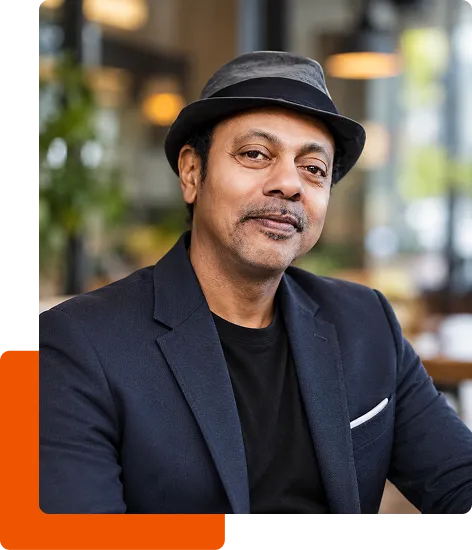
I'm Brian Rivera, and I've spent my career behind the camera, exploring the art of visual storytelling and capturing people, moments, and experiences.
From working on film and television productions to photographing thousands of people across different settings, my journey has given me the opportunity to understand photography from many different perspectives.
Over the years, one thing has remained at the heart of my work: creating meaningful photographs starts with understanding the person in front of the camera.
A little of what you'll find here:
Practical photography and posing education built around real world experience.
Insights from my years working across photography, film, and visual storytelling.
I'd love to connect and learn more about your photography journey.
REAL EXPERIENCES. REAL PROGRESS. REAL PHOTOGRAPHERS.

"I Understand the Little Details That Make a Difference."
I used to rely on finding poses online without really understanding why they worked.
Brian helped me look at posing differently and pay attention to the small details that can completely change a photograph.
I now feel more intentional about how I direct and position my clients.
-Sarah Mitchell
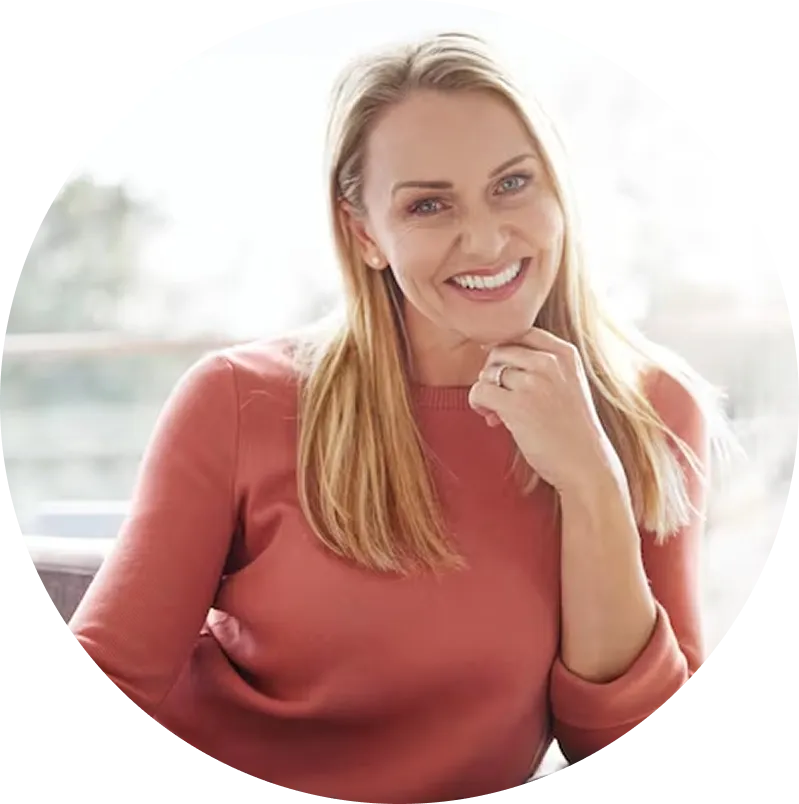
" I Feel More Confident Directing People in Front of My Camera."
Before working with Brian, I sometimes struggled with knowing exactly how to guide my clients into natural looking poses.
I now have a much better understanding of positioning, hand placement, and how to communicate with people in front of the camera.
It's made me feel much more prepared during my sessions.
-Emily Carter

"My Photography Sessions Feel More Natural Now."
I always wanted to become better at directing people who weren't comfortable in front of the camera.
Learning about rapport, communication, and practical posing techniques helped me approach those situations differently.
I feel more confident guiding my clients and making the experience comfortable for them.
-Jessica
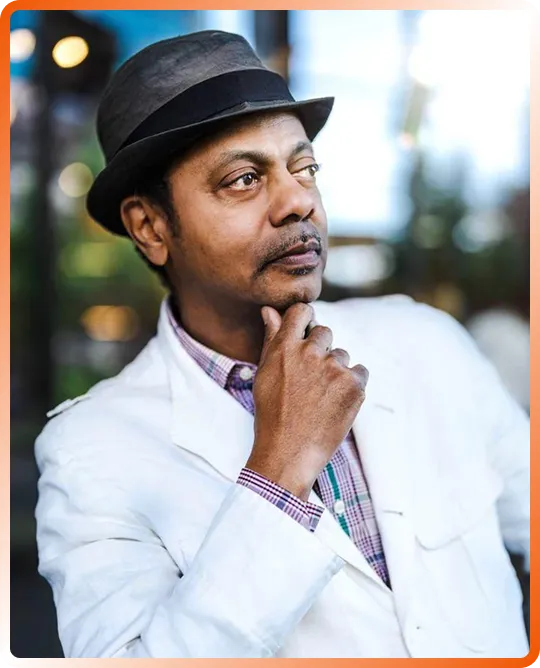
WHY I DO WHAT I DO
My Mission Is to Help Photographers Feel More Confident Behind the Camera
I've photographed thousands of everyday people. From portrait sessions to everyday clients, I've learned how to work with people who aren't professional models and help them feel more comfortable in front of the camera.
I've photographed over 1,000 runners in a single day. At the Peachtree Road Race, I learned the importance of working efficiently, adapting to different people, and making the most of every moment behind the camera.
I've worked with students across Georgia. Through school and yearbook photography, I've gained experience photographing people with different personalities and comfort levels, learning that clear direction can make a real difference.
I've learned from my own mistakes. A realtor headshot session that required a reshoot taught me that overcomplicating poses doesn't help anyone. Sometimes, simpler instructions are exactly what a client needs.
I've been recognized for my photography work. In 2005, I was named Best Photographer/Sales at Glamour Studio, an experience that forms part of my professional journey and years of working with people through photography.
My experience goes beyond photography. As an Emerson College graduate with film industry credits including The Walking Dead Season 1, Fast & Furious, and Triple 9, Also Cinematographer on several full length independent films The List, Checkmate and Atlanta to New York, I've developed a practical understanding of directing people and working under pressure.
START WITH THE FUNDAMENTALS. BUILD CONFIDENCE BEHIND THE CAMERA.
Every Great Photographer Starts Somewhere. Give Yourself a Better Understanding of Posing With a Simple, Practical Framework Designed for Everyday Photography Sessions.
YOUR FIRST STEP TOWARD MORE CONFIDENT CLIENT DIRECTION
The Simple Posing Framework for Everyday Clients
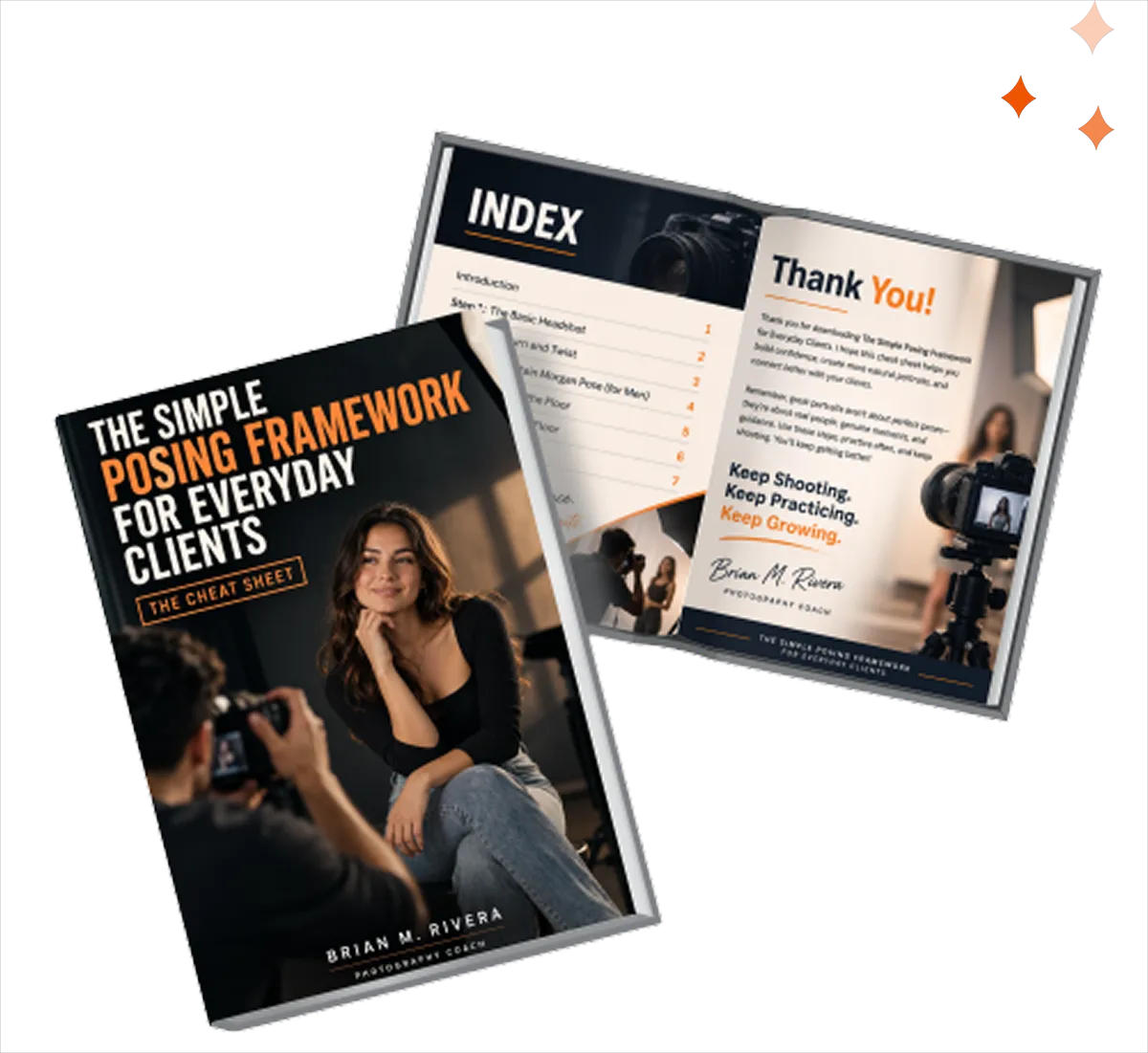
A Practical Guide to Understanding Posing, Positioning, and Helping Your Clients Feel More Comfortable in Front of the Camera.
Have you ever had a client stand in front of your camera and tell you, "I don't know how to pose"?
I've seen how these little moments can make a difference during a photoshoot. And I believe one of the best ways to become more comfortable directing people is to develop a stronger understanding of the fundamentals behind posing.
That's exactly why I created The Simple Posing Framework for Everyday Clients.
You don't need to memorize hundreds of poses or completely change the way you photograph. Sometimes, it's about understanding a few important fundamentals and learning how to apply them when someone is standing in front of your camera.
The Fundamentals of Posing: Understand why having a clear approach to posing matters and how to think more intentionally about positioning your subjects.
Working With Everyday Clients: Start thinking about how to guide people who might not have much experience being photographed.
My intention with this guide is simple: to help you stop feeling like you have to figure everything out from scratch every time someone steps in front of your camera.
TAKE YOUR POSING KNOWLEDGE FURTHER.
Build a Stronger Foundation in Posing, Learn How to Direct Your Clients, and Approach Your Photography Sessions With Greater Confidence.
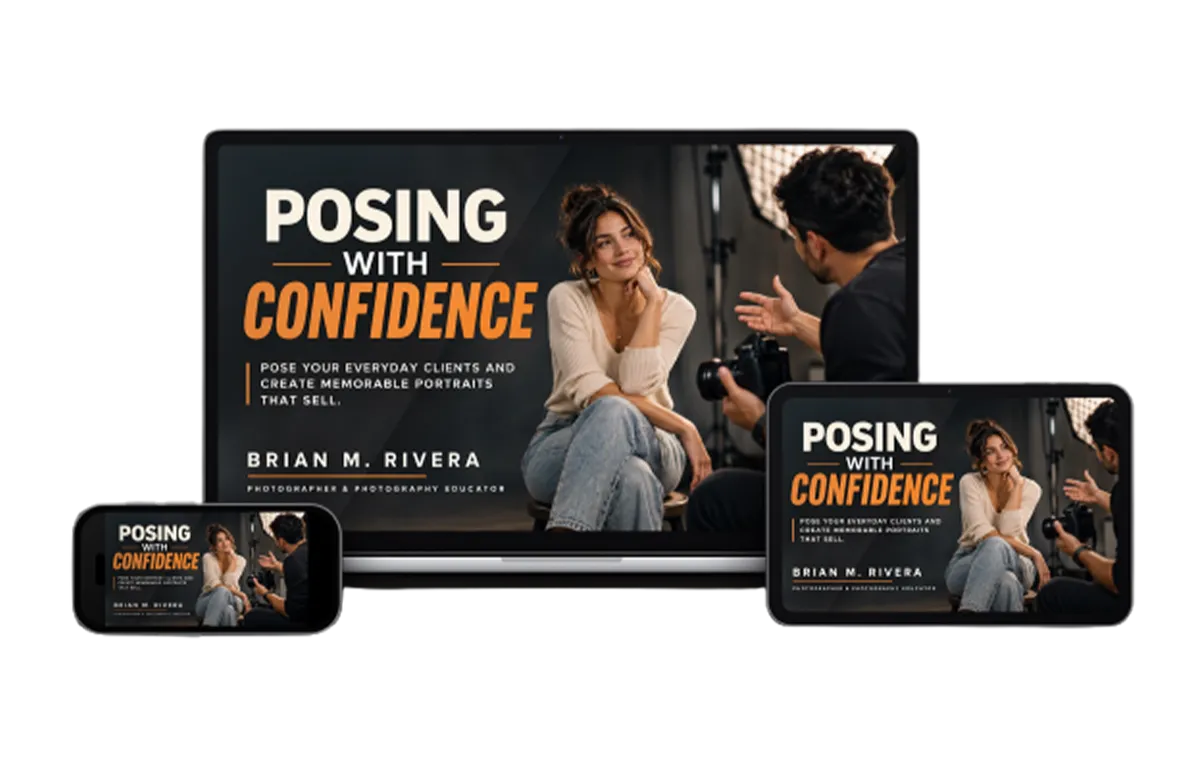
MY COMPLETE POSING COURSE FOR PHOTOGRAPHERS
Posing with Confidence
Knowing how to take a great photograph is one thing. Knowing how to guide the person standing in front of your camera is another.
You might understand your camera, lighting, composition, and the technical side of photography. But when it comes to directing people, you may still find yourself wondering what pose to try next, where your client's hands should go, or how to help someone who feels awkward in front of the camera.
I've experienced how important these details are throughout my photography career. And I've learned that great posing isn't simply about memorizing a collection of poses. It's about understanding how the body works in front of the camera, communicating clearly, building rapport, and knowing how to guide someone through a photograph.
That's why I created Posing with Confidence.
This course takes you through the fundamentals of posing and client direction in a structured, practical way. I'll walk you through different techniques, explain the details that make a difference, and help you understand how to apply them during your own photography sessions.
My goal with this course is to give you a more structured way to approach posing, so you don't have to rely on guesswork every time a client steps in front of your camera.
I want you to understand not just what pose to try, but also the little details behind it and how to communicate those instructions to the person you're photographing.
ABOUT ME — BRIAN RIVERA
I've Spent Years Behind the Camera. Now, I Want to Help You Feel More Confident Behind Yours.
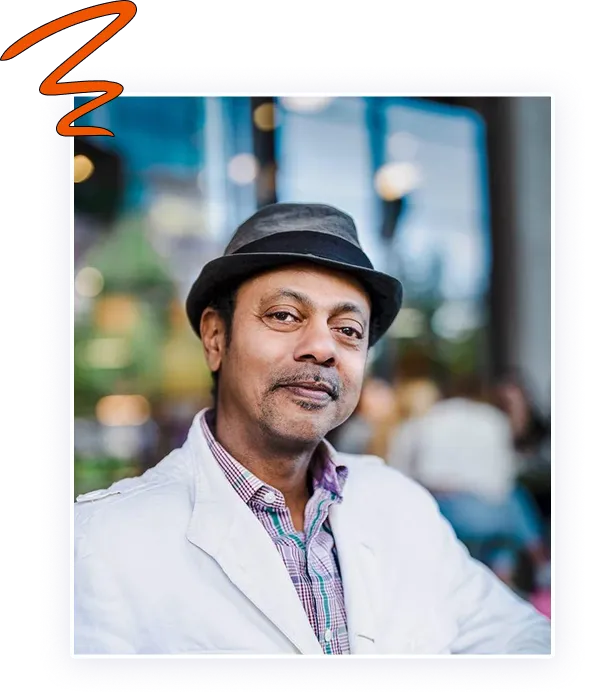
ABOUT ME — BRIAN RIVERA
I've Spent Years Behind the Camera. Now, I Want to Help You Feel More Confident Behind Yours.
I've spent years photographing and directing people, and I've learned that great portraits aren't just about camera settings or lighting. They're also about knowing how to guide the person standing in front of your lens.
I've photographed thousands of everyday people, worked on school and yearbook portraits across Georgia, and photographed over 1,000 runners in a single day at the Peachtree Road Race. I've also learned some lessons the hard way, including a realtor headshot session that became unnecessarily complicated and required a reshoot.
That experience taught me how important simple, clear direction can be. Through Perfect Poses, I want to share what I've learned and help you feel more prepared to pose and direct everyday clients, without overcomplicating the process or having to figure everything out on your own.
I've photographed thousands of everyday people. From school portraits to large-scale events, I've worked with people who bring different personalities and comfort levels to a shoot. That experience has taught me the value of clear direction and a practical approach to posing.
I've learned the importance of keeping things simple. My own experience with an overcomplicated realtor headshot session taught me that the best approach isn't always the most complicated one. Clear instructions can make the process easier for both the photographer and the client.
My background goes beyond portrait photography. I'm an Emerson College graduate, and my film industry credits include work associated with The Walking Dead, Fast & Furious, and Triple 9. Production Assistant on the other two, Also Cinematographer on several full length independent films The List, Checkmate and Atlanta to New York, My experience in photography and filmmaking has helped shape how I think about directing people, communicating clearly, and working under pressure.
GOT QUESTIONS? I'VE GOT ANSWERS.
Frequently Asked Questions
A Few Things You Might Want to Know Before Getting Started.
Are These Resources Suitable for Beginner Photographers?
Absolutely. I believe having a good understanding of posing is valuable at every stage of your photography journey.
Whether you're relatively new to photography or you've already worked with plenty of clients, understanding body positioning, hand placement, eye direction, and client communication can help you approach your sessions more intentionally.
My resources are designed to make these concepts practical and approachable, so you can continue developing your skills regardless of where you're starting.
Do I Need Professional Photography Equipment to Apply What You Teach?
No special equipment is required to start developing your understanding of posing.
My focus is on helping you understand how to work with the person in front of your camera. Things like posture, body angles, hand placement, eye direction, and communication are important regardless of which camera you're using.
You can start practicing these fundamentals with the equipment you already have.
Will This Help Me Work With Clients Who Feel Awkward in Front of the Camera?
That's one of the situations I want to help photographers become more comfortable handling.
Not everyone who stands in front of a camera knows what to do. Some people feel nervous, some aren't sure how to position themselves, and others simply need a little guidance.
That's why I include the importance of rapport and communication alongside practical posing techniques. Learning how to guide someone clearly and help them feel more comfortable can make a real difference in the overall photography experience.
COPYRIGHT | poseperfectguide.com | TERMS & CONDITIONS